What’s a triggered flow?
A triggered flow is marketing automation on autopilot: contacts enter when they match a trigger, then move through the steps you’ve laid out — sending emails, waiting, branching, updating fields — until they reach the end. Welcome series, onboarding sequences, re-engagement campaigns: this is where they live. Head to Campaigns and click Build a flow on the Triggered Flow card (or Add > Create Triggered Flow). Tented creates an Untitled flow you can rename at the top of the page, and you land on the visual flow builder with three tabs: Overview (analytics), Edit Flow (the canvas), and History.Set the trigger
Click the Trigger node to choose how contacts enter: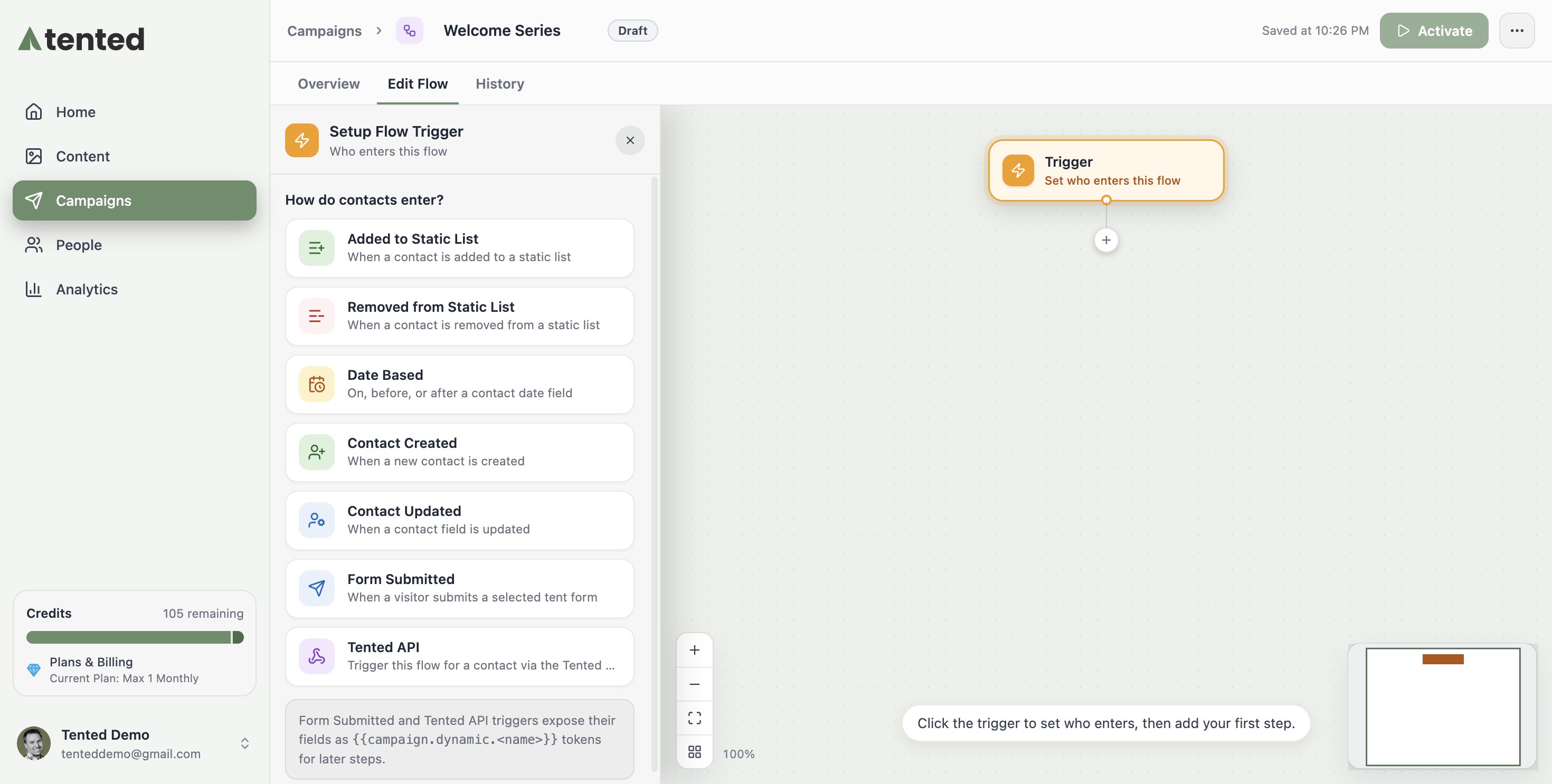
- Added to Static List — the classic welcome-series trigger
- Removed from Static List
- Date Based — on, before, or after a contact date field
- Contact Created — the moment someone new hits your database
- Contact Updated — when a contact field changes
- Form Submitted — when a visitor submits a form on one of your tents 🏕️. Each answer is also handed to the run as a
{{campaign.dynamic.*}}token, so later emails can echo what was submitted. - Tented API — an external system enrolls the contact by calling the public API, optionally passing values that become
{{campaign.dynamic.*}}tokens (a coupon code, an order number, …)
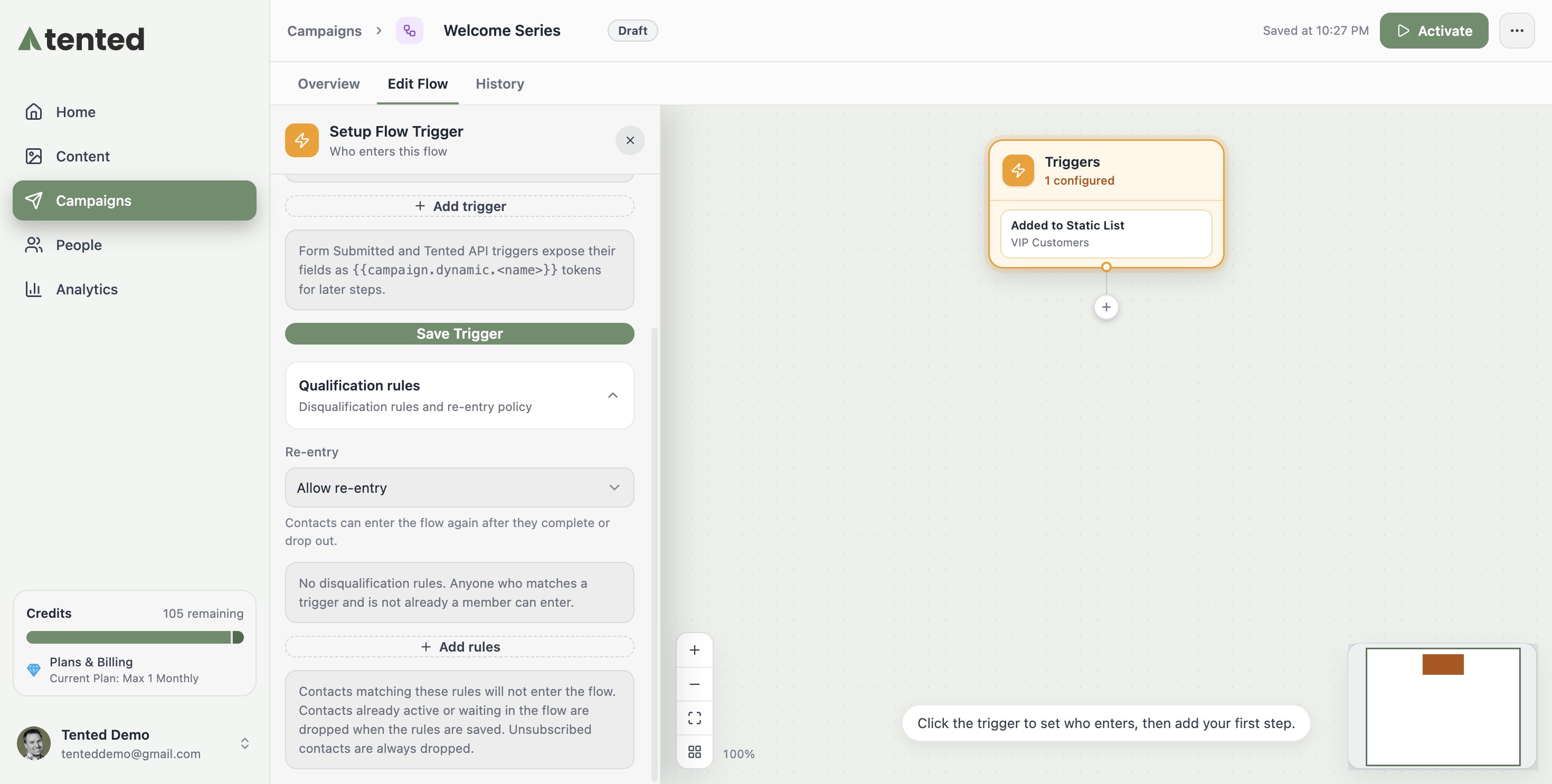
Qualification rules
Below the triggers you’ll find Qualification rules — the fine print of who gets in:- Re-entry policy: allow contacts to go through the flow again after they finish (or block them to once ever).
- Disqualification rules: audience rules that keep matching contacts out — for example, exclude anyone whose lifecycle stage is already “Customer” from a lead-nurture flow.
Build the steps
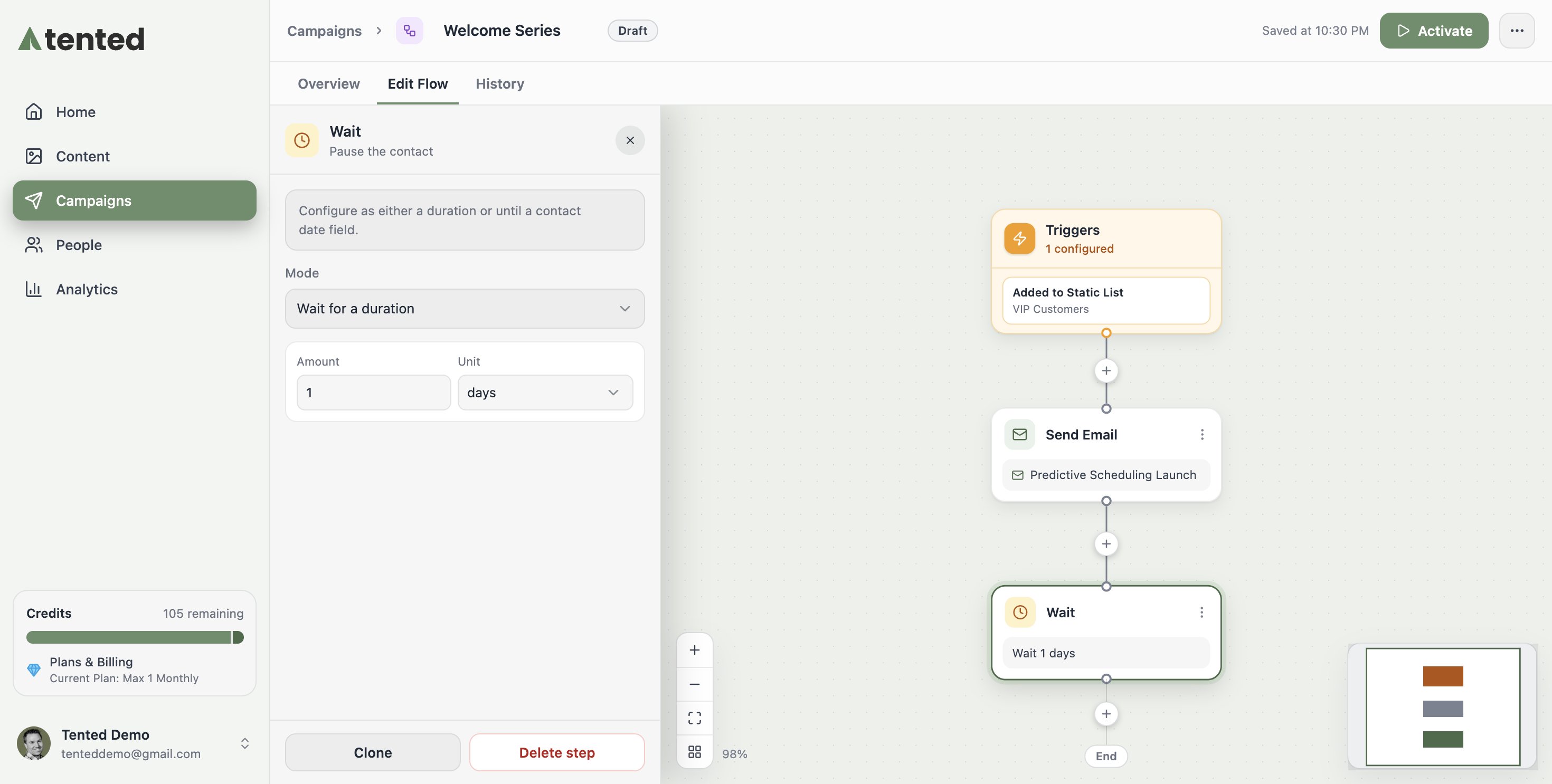
Click + anywhere on the canvas to add a step. You’ve got a full automation toolkit: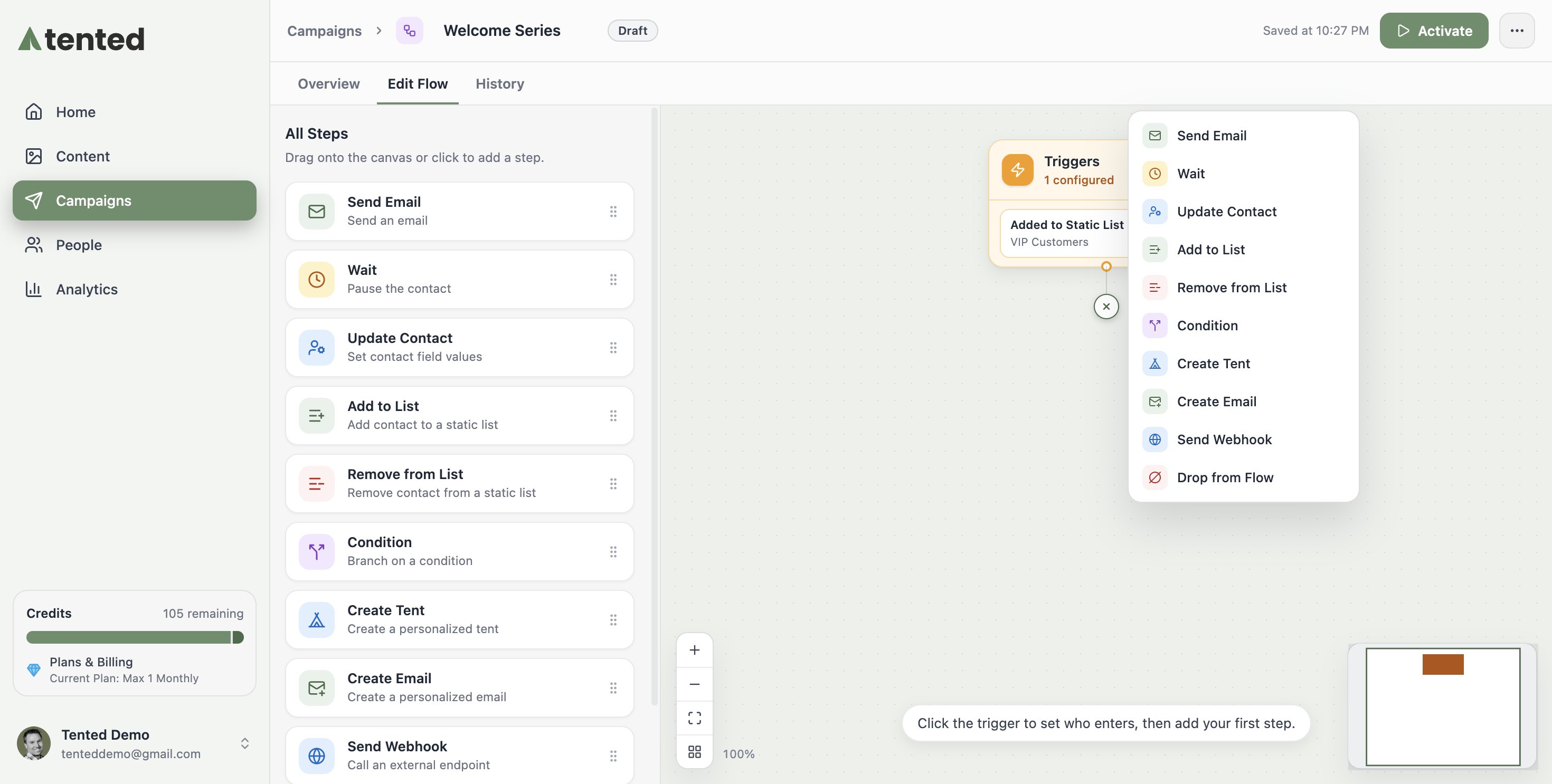
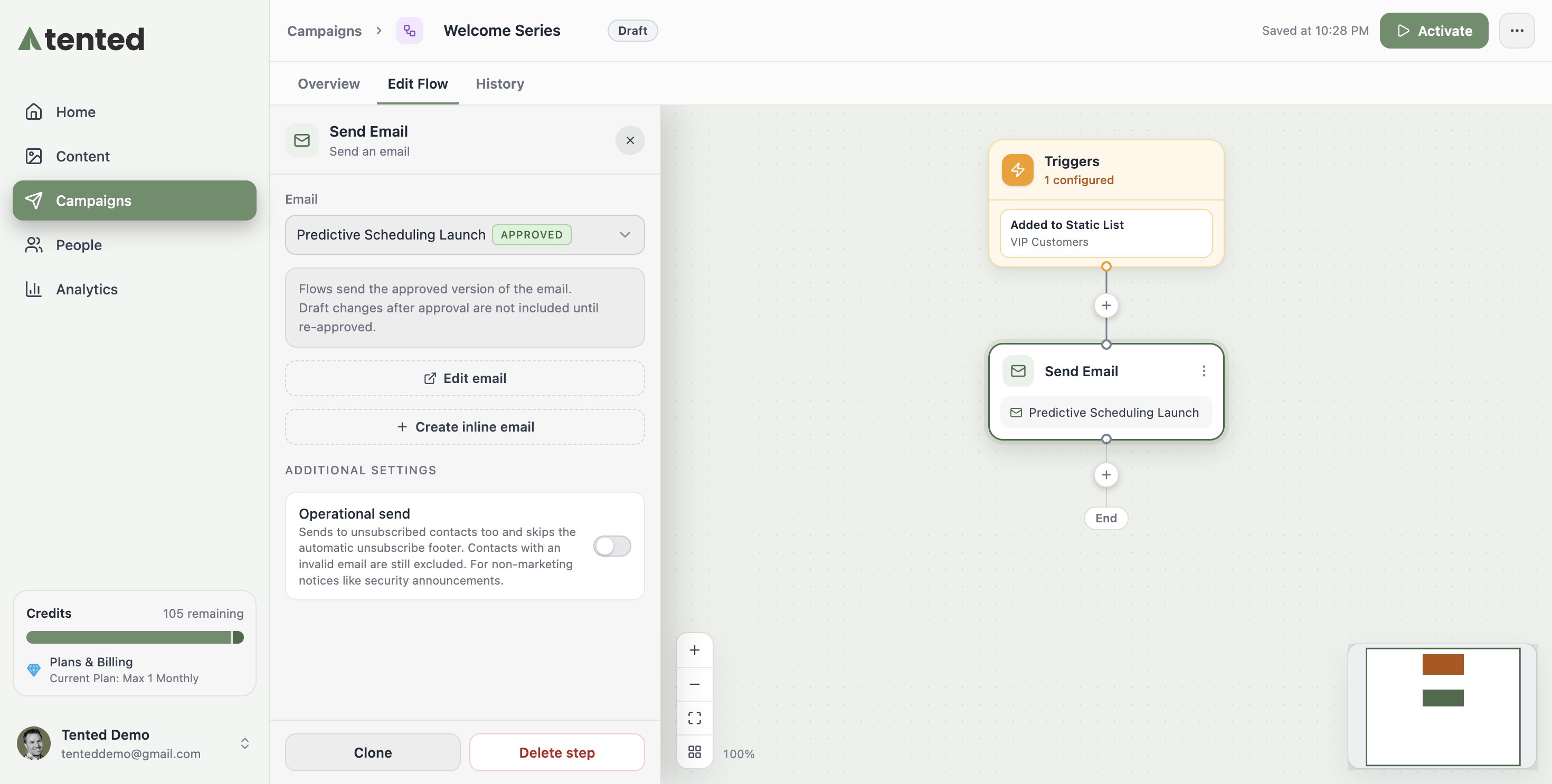
For a Send Email step, pick any approved email — the same approval rule as blasts — or compose one inline. There’s also an operational-send toggle for non-marketing notices.
The Create Tent step
The Create Tent step generates a personalized landing page for each contact as they pass through the flow — a unique page per person, built from their contact data.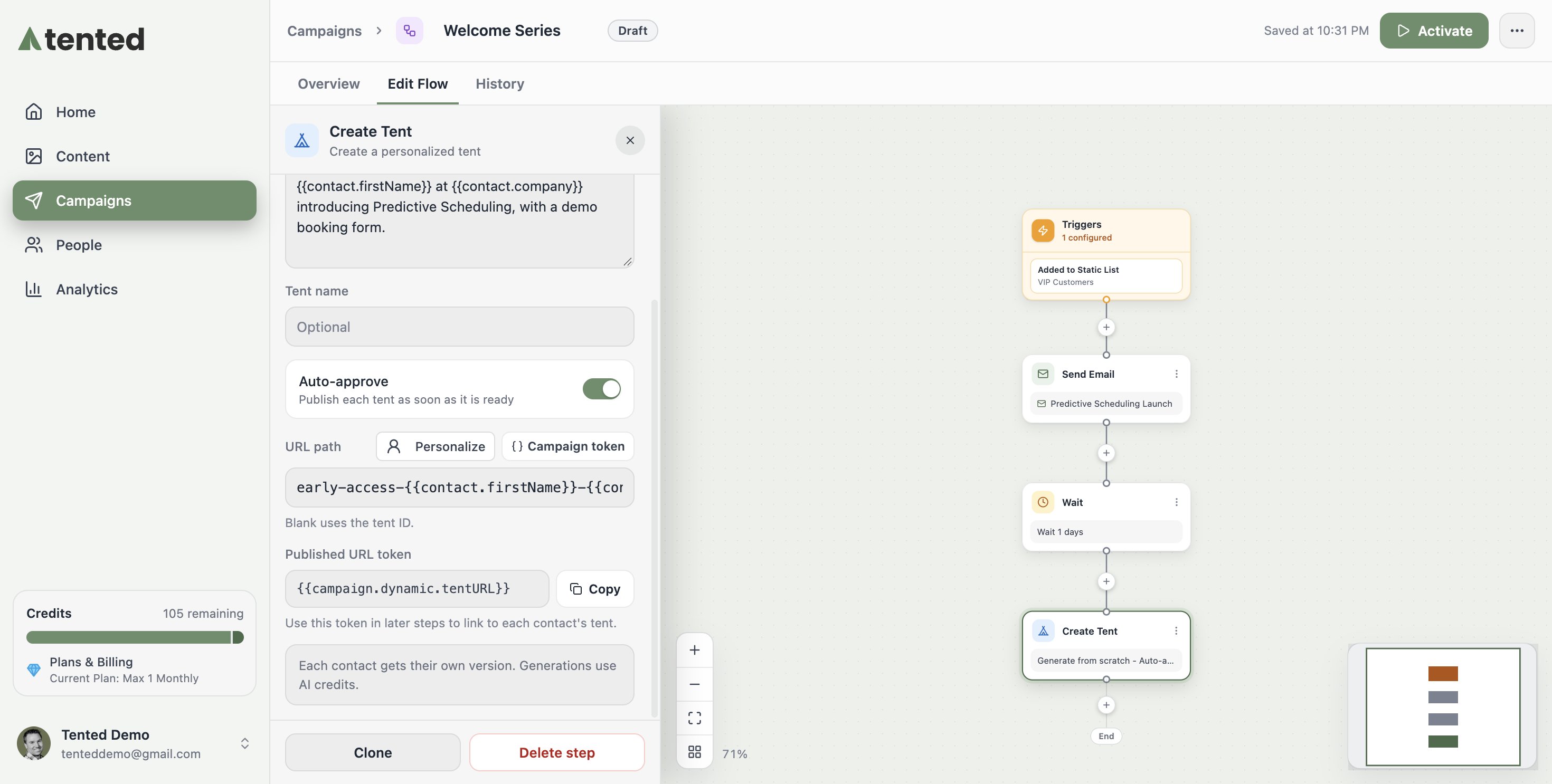
-
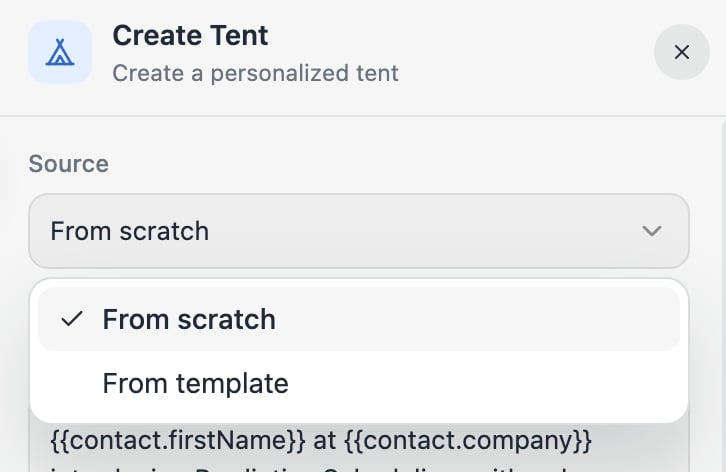
Source — From scratch (generate with AI from a prompt) or From template (copy an approved tent template, no generation credits).
-
Prompt — what to generate. Click Personalize to drop in contact tokens like
{{contact.firstName}}, so every contact gets a page tailored to them. - Tent name and URL path — both optional and both personalizable; a blank URL path falls back to the tent ID.
- Auto-approve — publish the generated tent automatically, so it’s live the moment it’s created.
The Create Email step
The Create Email step is the email twin of Create Tent: it creates a personalized email for each contact as they pass through the flow, so every person gets copy written for them rather than one shared email with merge tokens. Configure it with:- Source — From scratch (generate with AI from a prompt) or From template (start from an approved email template; choose Create without generation to copy it as-is with no generation credits, or Generate with prompt to let AI rework it).
- Prompt — what to write. Click Personalize to drop in contact tokens, or the campaign token picker for values from earlier in the run: a form submission, API trigger tokens, or a Create Tent step’s
{{campaign.dynamic.tentURL}}, so the generated email can link to that contact’s own page. - Email name, Subject, and Preview text — all optional and all personalizable. A blank subject falls back to the template’s default, or to the subject the AI writes for a generated email.
- Sender — optional from name, from address, and reply-to overrides. Leave them blank to inherit the template’s defaults, then your workspace sender defaults.
- Auto-approve — approve the email the moment it’s created, so a later Send Email step can send it without anyone opening the editor. Turn it off to leave each email as a draft for review.
Activate it
Click Activate and your flow goes live: from now on, contacts matching a trigger are enrolled automatically and start moving through the steps.Activating flows requires a Pro or Max plan. On the Free plan you can build, edit, and save flows — the canvas shows a reminder, and an Upgrade to Unlock gem appears in place of the Activate button. If a workspace downgrades to Free, its active flows are paused automatically (members stay put, and resume if you upgrade and reactivate). See Upgrading Your Plan.
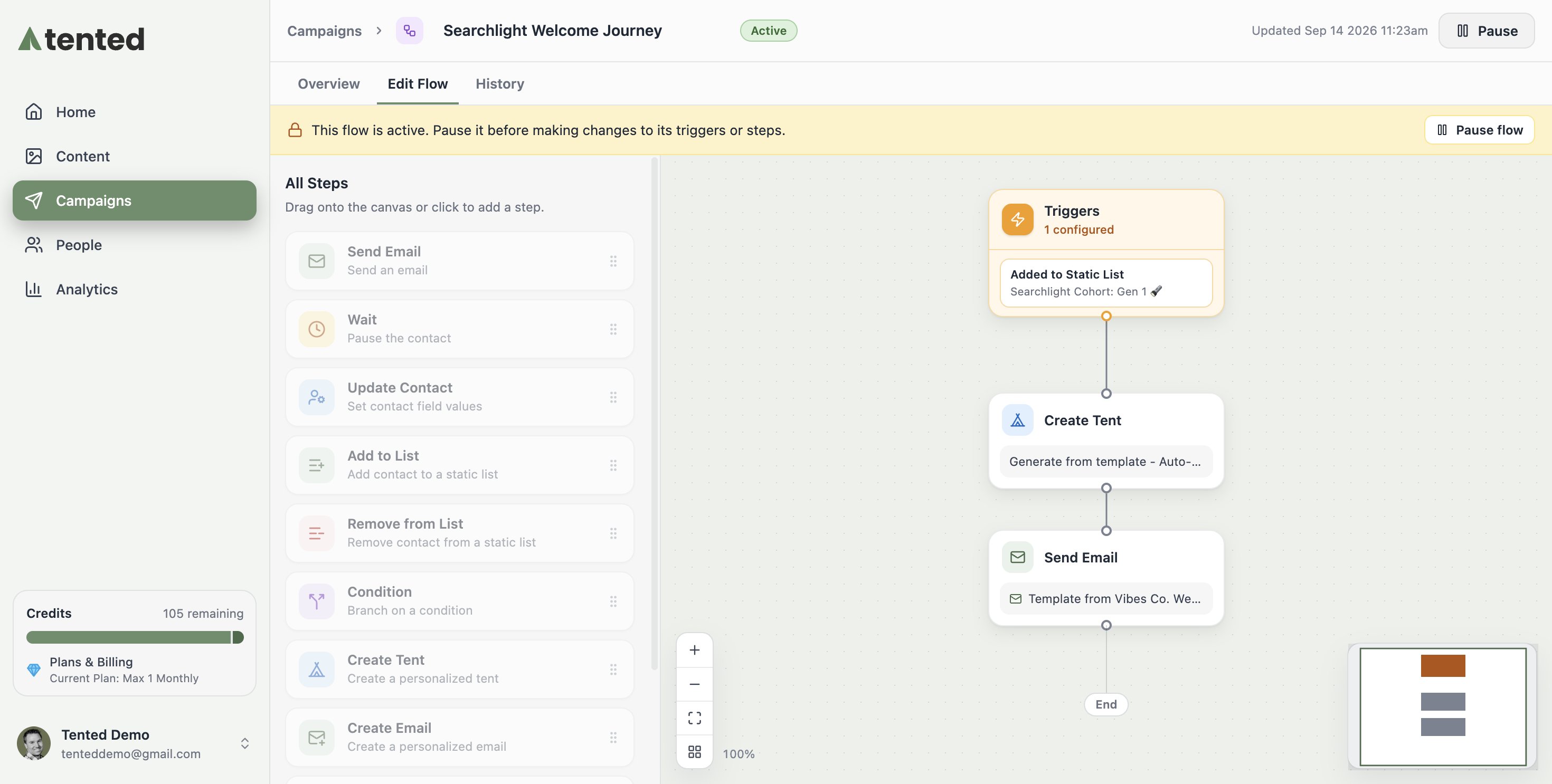
Active flows are locked for editing — hit Pause first if you need to make changes, then reactivate. Pausing doesn’t kick anyone out: contacts already in the flow simply wait, and pick up where they left off when you reactivate. Triggers fire on new events after activation (evaluated about once a minute); contacts already on a list won’t enter an “Added to Static List” flow retroactively.
Track performance
The Overview tab shows your flow’s vitals: total contacts entered, how many are currently waiting, the most recent entry, who’s parked at each Wait step, and per-email stats (sent, delivered, opened, clicked, bounced, unsubscribed, spam).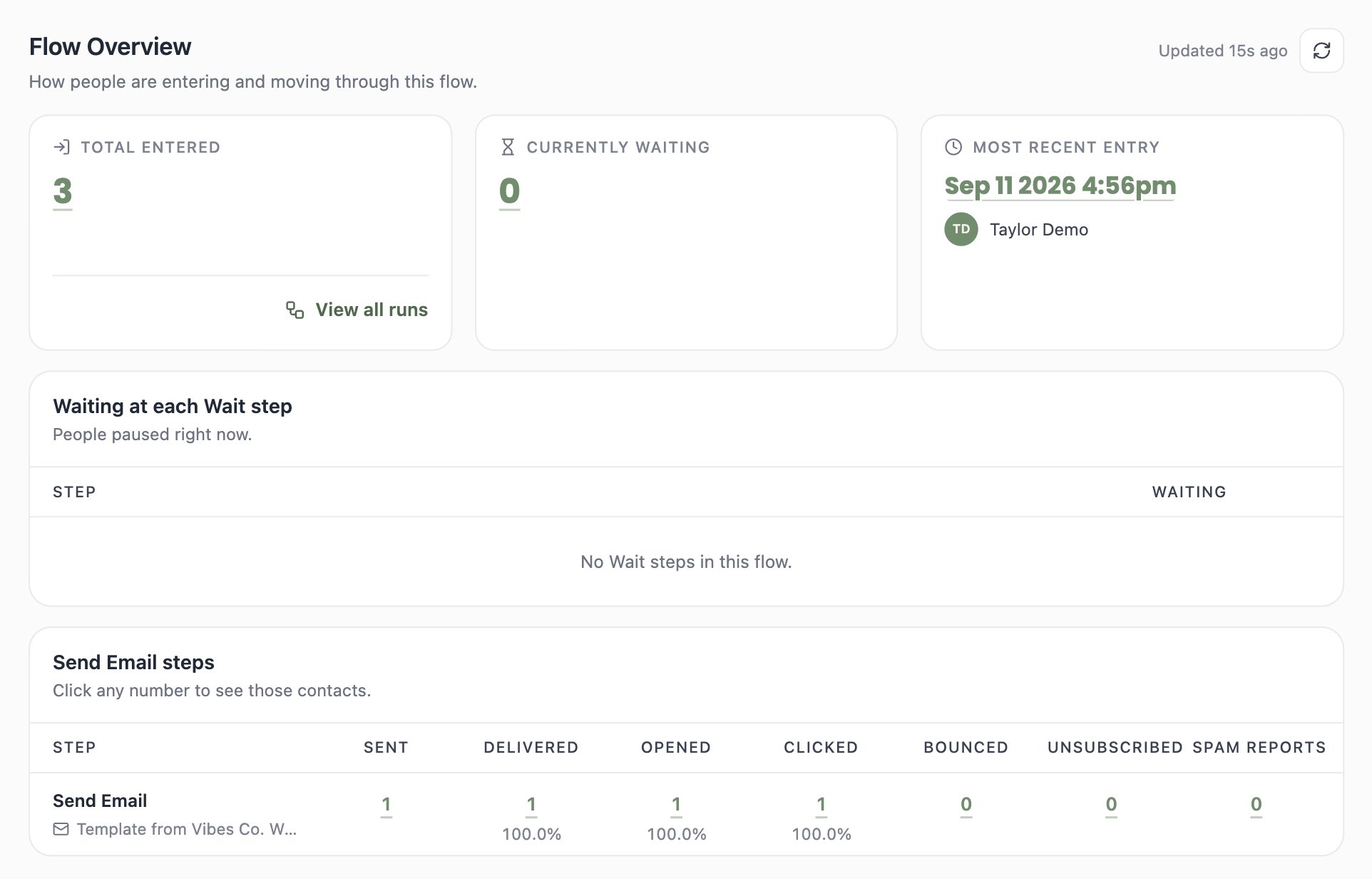
See every run
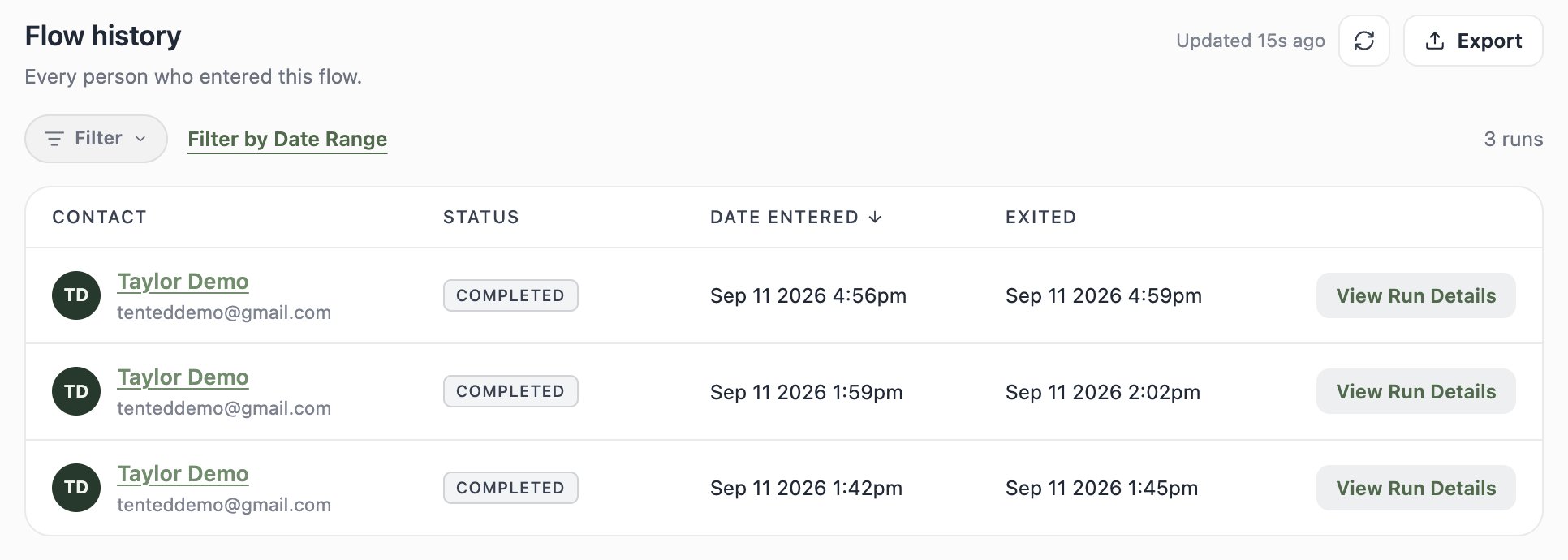
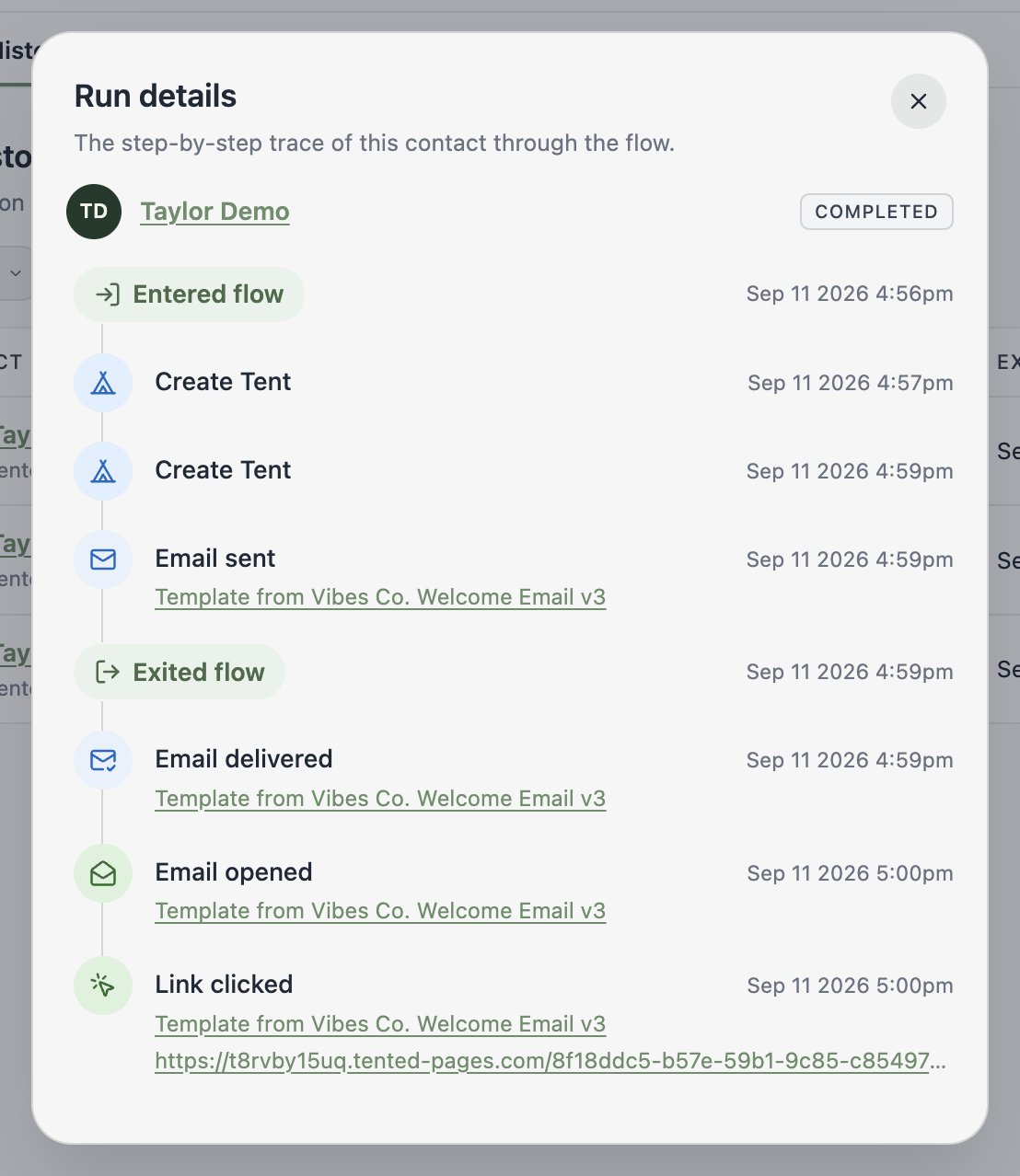
The History tab lists every contact who’s been through the flow — their status (In Flow, Completed, Exited), when they entered, and when they left. Filter by status or date range, and click Export for a CSV.